D2C websites built to convert, not just look good
CRO-optimised, SEO-structured stores on Shopify and beyond — live in 7–14 days. We design the whole journey, from the first ad click to the thank-you page, and we commit to taking your conversion rate to at least 5×.
D2C stores we've designed & built
Live stores across gemstones, ethnic wear, home linen and jewellery — each one built around its buyer's journey, not a template.
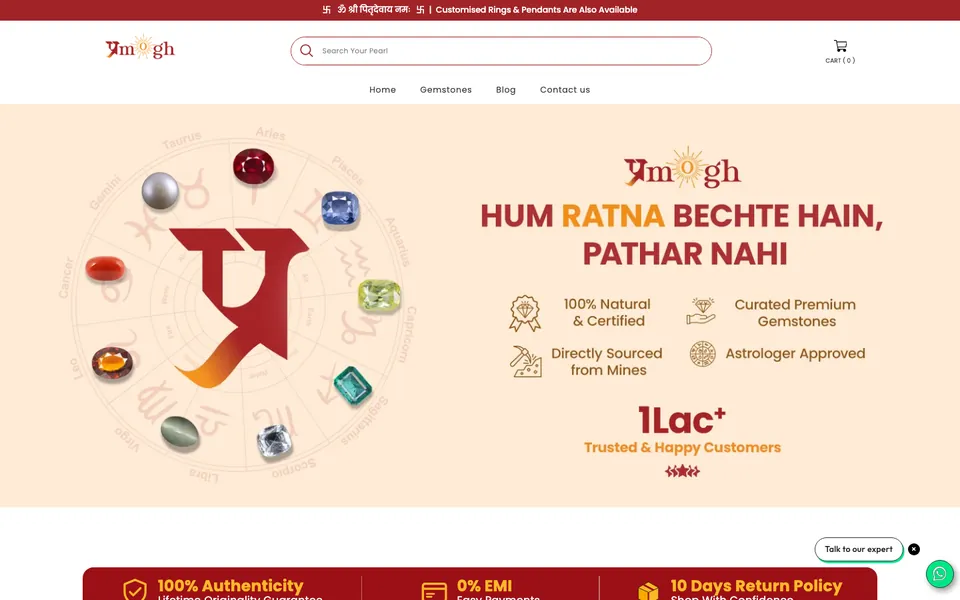
Pramogh
Gemstones & astrologyNatural, lab-certified gemstones with an astrologer-led buying journey.
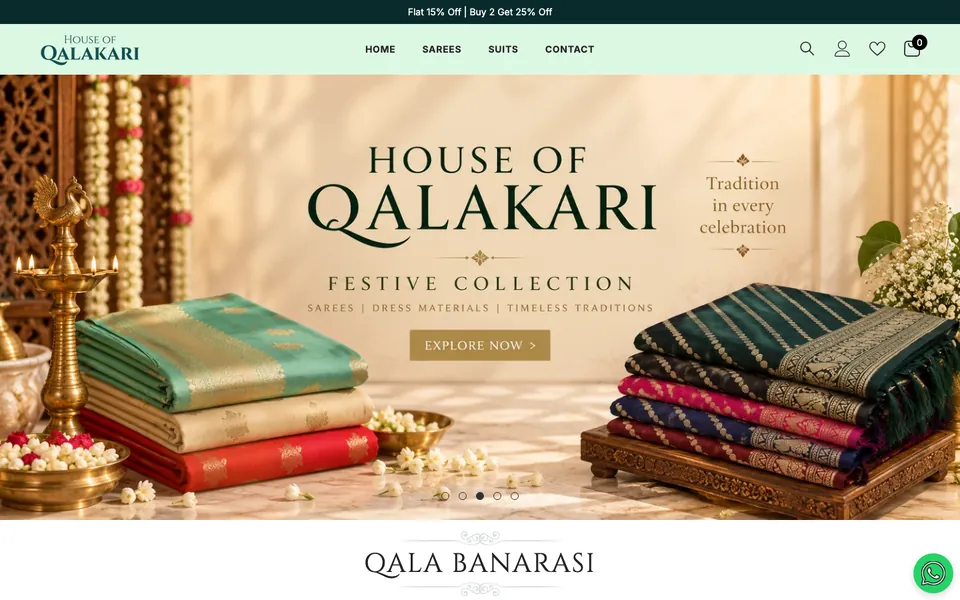
House of Qalakari
Ethnic wearBanarasi silk and cotton sarees, woven in Varanasi.
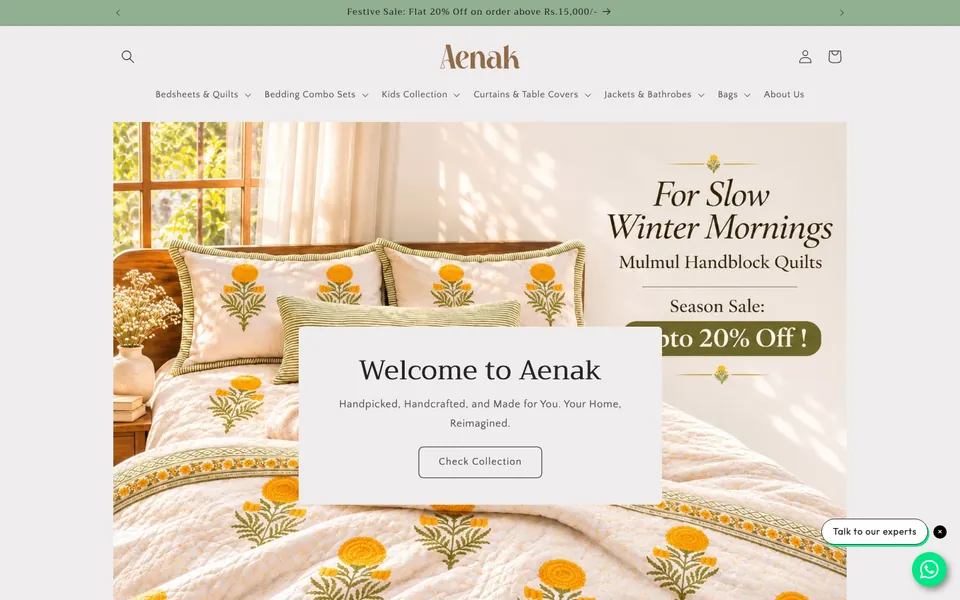
Aenak
Home linenHandblock-printed cotton bedsheets, dohars and quilts.
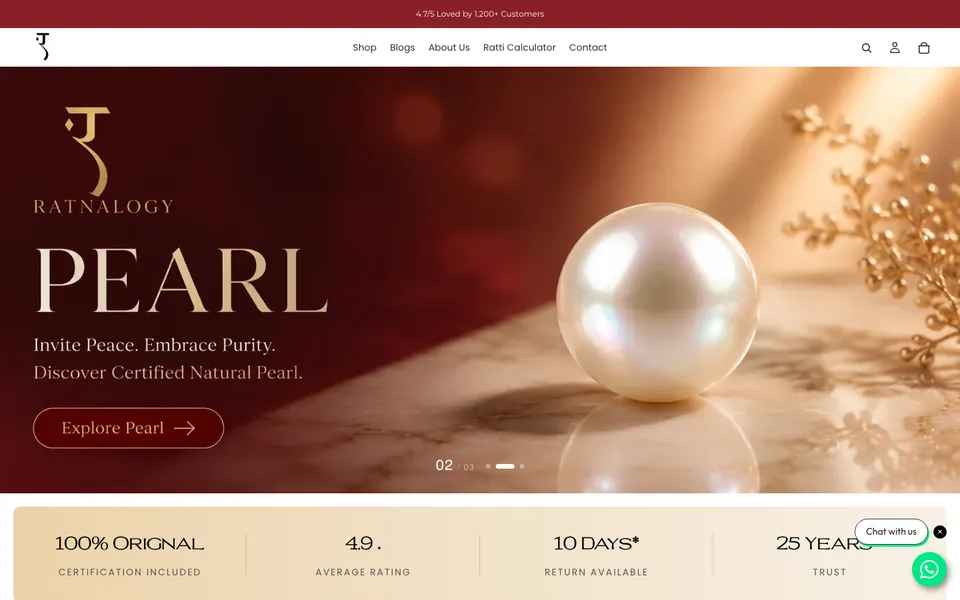
Ratnalogy
GemstonesCertified natural gemstones for the modern buyer.
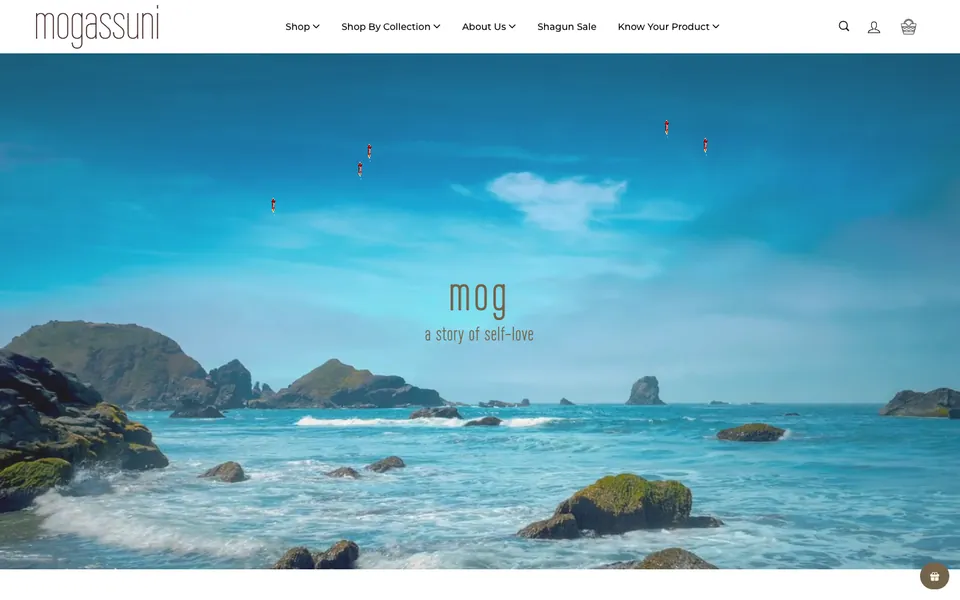
Mogassuni
Handcrafted jewelleryHandcrafted jewellery, told as a story of self-love.
A pretty website isn't a selling website
Most stores are built to win a design review, not to sell. You pay for every click on Meta and Google — then lose most of it to slow pages, confusing navigation and a checkout that asks too much.
of carts are abandoned
Surprise shipping costs, forced sign-ups and long forms send buyers away at the last step.
Source: Baymard Institute, average documented cart abandonmentleave a slow mobile page
More than half of mobile visitors bounce if a page takes longer than 3 seconds to load. In India, most of your traffic is mobile.
Source: Google mobile speed researchtypical D2C conversion rate
Out of every 100 paid visitors, 98 leave without buying. Lifting that rate is the cheapest growth lever you have — it makes every ad rupee work harder.
Typical range we see in D2C auditsSame traffic. Same ad spend. 5× the orders.
We don't hand over a website and walk away. We commit to a number — and we keep testing until we hit it.
At least 5× your current conversion rate
Your conversion rate is the multiplier on everything else you spend on marketing. Moving it from 0.8% to 4% means the same ₹1 lakh in ads brings in five times the orders.
- 1Baseline. We record your current conversion rate, AOV and funnel drop-offs before we touch anything.
- 2Build. A new store with the full entry-to-exit journey, live in 7–14 days.
- 3Test & iterate. Weekly CRO sprints after launch — A/B tests, heatmaps and session recordings — until we hit the target.
What would 5× mean for you?
We design the journey, not just the pages
A visitor goes through six moments before they become a repeat customer. We build every one of them to remove friction and add a reason to say yes.
Land: make the promise match the ad
Visitors decide almost instantly whether to stay. The page they land on has to load fast, repeat what the ad promised and show the next step.
- Ad-matched landing pages — the headline and offer mirror the creative they just clicked
- Announcement bar with the offer that matters: free shipping, COD, delivery time
- Mobile-first hero with one clear call to action above the fold
- Trust strip — reviews, returns, secure payments — before they scroll
- Sub-2.5s load on 4G: compressed media, lazy loading, minimal apps
Discover: get them to the right product in two taps
Confused shoppers don't buy. Navigation, search and collections are planned around how your customers actually shop — by concern, occasion, size or price.
- Smart search with autocomplete, typo tolerance and product previews
- Intent-based mega menu — shop by concern, occasion or bestsellers
- Collection filters that actually narrow the choice (size, price, type)
- Badges that sell — "Bestseller", "Back in stock", "Only 3 left"
- Product-finder quiz for categories where people need guidance
Decide: answer every doubt before it becomes an exit
The product page does the job of your best salesperson. It has to answer price, proof, fit and delivery questions without the customer scrolling forever.
- Sticky add-to-cart that follows the thumb on mobile
- Pincode delivery check — "Delivered by Thursday · COD available"
- Photo & video reviews and UGC right below the price
- Size guides, ingredients and FAQs in tabs, not walls of text
- Bundles & "frequently bought together" to lift AOV
Cart: raise the order value without adding friction
The cart is where you earn margin. A slide-out drawer keeps them shopping, a progress bar gives them a reason to add one more item, and nothing surprises them.
- Slide-out cart drawer — no page reload, no lost momentum
- Free-shipping progress bar — "You're ₹180 away from free delivery"
- One-tap upsells picked by what actually sells together
- Coupons applied automatically, so no one leaves to hunt for codes
- All costs shown upfront, so there are no surprises at checkout
Checkout: one screen, a few taps, done
For Indian buyers that means phone-OTP login, saved addresses, UPI first and COD handled smartly. We set up one-click checkouts like Shopflo and GoKwik and tune them for your margins.
- Phone-OTP login with addresses prefilled — no passwords, no forms
- UPI-first payments with a prepaid discount to cut COD and RTO
- COD rules by pincode, order value and risk score
- Trust signals at the moment of payment: secure badges and the returns promise
- Guest checkout always — never force an account
Exit & return: every visitor leaves something behind
Most visitors won't buy on their first visit. The ones who leave should leave a phone number. The ones who buy should come back.
- Exit-intent offer that captures WhatsApp numbers, not just emails
- Thank-you page upsell — a one-click add-on after payment
- Order tracking page on your own site, so customers don't need to call support
- WhatsApp opt-in wired to cart recovery and reorder flows
- Full tracking — GA4, Meta CAPI and Google enhanced conversions — so ads learn from real buyers
12 conversion moments we build into every store
These are the details shoppers notice and most agencies skip. Each one targets a specific reason people hesitate.
Sticky add-to-cart
The buy button stays within thumb reach while shoppers scroll reviews and details.
Product pagePincode delivery ETA
"Delivered by Thursday, COD available" answers the most common question before checkout.
Product pageVideo & UGC reviews
Real customers on camera, placed right under the price, where doubt peaks.
Product pageFree-shipping progress bar
A visible goal that nudges shoppers to add one more item and lifts AOV.
CartBundle builder
"Build your kit, save 15%" — turns a single purchase into a routine.
Product & cartProduct-finder quiz
Three questions to a personalised pick — and a lead captured even if they don't buy.
DiscoverSmart search
Autocomplete, typo tolerance and synonyms. People who search are usually the most ready to buy.
DiscoverPrepaid nudge
A small UPI discount that moves buyers off COD and cuts RTO losses.
CheckoutOne-click checkout
Phone OTP, saved addresses and UPI — checkout in under 30 seconds.
CheckoutExit-intent WhatsApp capture
An offer shown as they leave, so a lost visitor becomes a lead you can reach.
ExitTrust strip
Ratings, returns, secure payments and press — shown before shoppers have to look for it.
Every pageThank-you page upsell
A one-tap add-on right after payment, the easiest extra revenue on the site.
Post-purchaseBuilt to rank from day one
SEO isn't something we add after launch. Site structure, URLs, schema and speed are planned before the first page is designed, so Google — and AI search — understand your store from the start.
Keyword-led architecture
Collections and categories mapped to what customers actually search, with clean URLs.
Product & review schema
Structured data for price, stock, ratings and FAQs, so listings show rich results.
Core Web Vitals
Fast LCP, stable layout and quick interaction on real mobile devices.
Internal linking
Collections, products and blogs linked so authority flows to the pages that sell.
Safe migrations
Full 301 redirect map when you switch platforms, so you keep the rankings you've earned.
Image SEO
Compressed WebP images, descriptive alt text and filenames for Google Images and visual search.
AI-search ready
Clear answers, FAQs and entity data that ChatGPT, Gemini and Google AI Mode can cite.
Meta & sitemaps
Unique titles and descriptions, canonical tags, XML sitemaps and robots rules on every page.
Shopify first — and wherever your brand needs to be
We recommend the platform that fits your catalogue, team and growth plans, not the one we happen to prefer.
Shopify & Shopify Plus
Custom themes and sections, metafields, Shopflo / GoKwik checkout, WhatsApp and CRM wired in.
WooCommerce
Fast, secure WordPress stores with clean code, caching and a checkout tuned for Indian buyers.
Webflow
Design-led brand sites and content hubs your team can edit without a developer.
Custom & headless
Next.js front-ends on Vercel, with or without Shopify behind them, for maximum speed and control.
Ad landing pages
Campaign-specific pages for Meta and Google ads, matched to each creative and built for fast testing.
Re-platforming
Moving from Wix, WooCommerce, Magento or a custom build to Shopify, with your products, customers, orders and SEO intact.
From kickoff to live store in two weeks or less
A fixed, focused sprint. You get a clear plan on day one and a working store to review well before launch.
Audit & plan
Funnel audit, baseline conversion rate, competitor teardown, sitemap and keyword map.
Journey & design
Mobile-first wireframes for every stage of the journey, then the visual design.
Build
Development, product setup, checkout, apps, schema and speed tuning.
Track & test
GA4, Meta CAPI and Google conversions, plus QA on real devices.
Launch & optimise
Go live with redirects in place, then weekly CRO sprints towards 5×.
A typical web agency vs Digistex4u
We're a performance marketing agency that builds websites, so we judge a site by orders, not compliments.
| What you get | Typical website agency | Digistex4u |
|---|---|---|
| Time to launch | 6–12 weeks | 7–14 days |
| Measure of success | "Looks great" | Conversion rate, AOV and revenue |
| Accountability | Handover and invoice | 5× conversion-rate commitment |
| User journey | Homepage and product template | Every stage from ad click to repeat order |
| SEO | Plugin added after launch | Architecture, schema and speed from day one |
| Indian buyer UX | Generic global theme | COD logic, pincode ETA, UPI-first, WhatsApp |
| Tracking | Basic pixel | GA4, Meta CAPI and enhanced conversions |
| After launch | Paid change requests | Weekly CRO sprints and A/B tests |
D2C website, CRO & SEO guides from our team
Meta ads landing pages that convert
The page elements that turn paid clicks from Meta into orders.
Landing page vs product page for paid traffic
When to send ad traffic to a dedicated page and when not to.
RBI authentication rules and D2C checkout
What the new payment rules mean for checkout conversion.
Core Web Vitals for Shopify D2C
How to make a Shopify store fast on real mobile devices.
Shopify product page SEO template
A product page structure that ranks and sells.
Collection page SEO for D2C
Turning category pages into your biggest organic entry points.
Structured data schema for Shopify
The schema that earns rich results for D2C stores.
Marketplace vs your own D2C website
Why your own store matters even if you sell on Amazon.
WhatsApp flows for COD, RTO and carts
The automations that recover visitors after they leave.
D2C website development — answered
Ready for a website that actually sells?
Book a free 20-minute call. We'll review your current store, show you where it's leaking conversions and give you a 7–14 day build plan.